


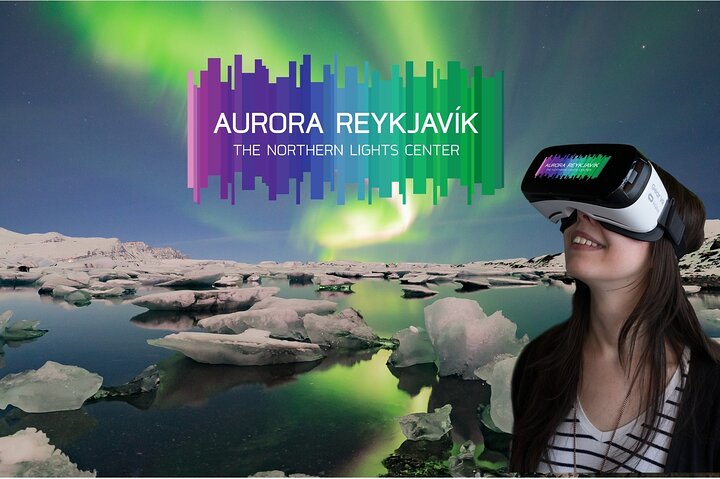


The Aurora Borealis
The northern lights (aurora borealis) are visible from Iceland between approximately September and April — curtains, arcs, and waves of green, purple, pink, and white light moving across the dark sky, caused by charged particles from the sun interacting with the Earth’s magnetic field and atmosphere. Iceland’s position just below the Arctic Circle (latitude 64°N) places it directly in the auroral zone — one of the best locations on earth for northern lights viewing.
A northern lights tour departs Reykjavik after dark (typically 9:00–10:00 PM in winter), driving away from the city’s light pollution to a viewing site where the sky is dark enough for the aurora to be visible. The guide monitors the aurora forecast (the Icelandic Met Office provides real-time data on solar activity and cloud cover) and selects the viewing location based on the clearest skies available that night. The tour runs approximately 3–4 hours.
What You Need to Know
The northern lights are not guaranteed. The aurora depends on solar activity (which is not predictable beyond a few hours) and clear skies (which are rare in Iceland’s cloudy climate). Even on an active aurora night, clouds can obscure the display. Most operators offer a free rebooking if no aurora is seen — take the offer and try again on a subsequent night.
Build multiple nights into your schedule. The statistical chance of seeing the northern lights on any single night in peak season is approximately 30–50% (depending on weather and solar activity). Three nights gives you approximately 80–90% cumulative probability. One night is a gamble.
The camera sees more than the eye. Faint aurora (which can appear as a greyish-green glow to the naked eye) photographs vividly with a long-exposure camera setting. Strong aurora (the dancing, vivid curtains of the photographs) is visible and dramatic to the naked eye. Manage your expectations — not every display is the dramatic, pulsing curtain of the tourism images.
Dress extremely warmly. You stand outside in the Icelandic winter for 1–2 hours. Temperatures of -5°C to -15°C with wind chill are normal. Thermal base layers, an insulated jacket, warm trousers, hat, gloves, buff/scarf, and warm boots are essential. Cold is the most common complaint on northern lights tours.
Frequently Asked Questions
When is the best time to see the northern lights in Iceland?
September through March, with peak season October through February (the darkest months). The equinox periods (September–October, February–March) are statistically strong for solar activity.
How much does a northern lights tour cost?
Approximately 6,000–12,000 ISK ($42–84 USD) per person for a bus tour. Small group and super jeep tours cost more (15,000–25,000 ISK). Free rebooking is standard if no aurora is seen.
Can I see the northern lights from Reykjavik?
Occasionally — if the display is strong and you can find a dark spot away from streetlights (the Grótta lighthouse at the western tip of the city is the best option). A tour drives 30–60 minutes from the city to genuinely dark skies, which significantly improves the viewing.
Do I need a tour, or can I find the northern lights myself?
Self-driving to a dark location is feasible if you have a car and are comfortable driving rural Icelandic roads at night in winter (potentially icy, unlit, remote). A tour provides the expertise (forecast monitoring, location selection), the transport, and the rebooking guarantee if conditions fail.